

NBHRN Announces 2026–2027 Board of Directors to Lead Fight Against Black Overdose Deaths
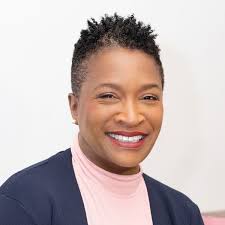
Tracie Gardner, Executive Director of the National Black Harm Reduction Network
NBHRN is the first Black-led national harm reduction network, advancing health and wellness for and with Black communities
BROOKLYN, NY, UNITED STATES, July 20, 2026 /EINPresswire.com/ -- The National Black Harm Reduction Network (NBHRN), the nation's first Black-led national harm reduction organization, today announced its 2026–2027 Board of Directors. The eight-member board unites leaders in public health, medicine, law, finance, policy, and community organizing to guide the organization as it confronts persistently high Black overdose death rates, even as overall drug fatalities have declined.
NBHRN’s new board will help position the organization to serve as a national hub for expertise, training, and advocacy during a period of significant growth, and to build the durable governance needed to sustain Black-led harm reduction work in the long term.
"We are building a lasting organization that serves as a resource for health and wellness," said Tracie M. Gardner, Founding Executive Director of NBHRN. "That means durable governance, sustainable funding, and leadership pipelines so Black-led harm reduction is not a moment but a permanent infrastructure. Seating this board is a deliberate step in that direction."
The idea for NBHRN began more than three decades ago with a Black woman and visionary, Imani Woods, who understood early that harm reduction had to be rooted in and led by the communities it serves. That vision took formal shape in 2024, when NBHRN was established as an independent nonprofit organization. Today, it stands as the country's first Black-led national harm reduction network, advancing health and wellness for and with Black communities.
The need for NBHRN's work has never been greater. Overdose deaths among Black Americans rose sharply over the past decade, and Black individuals now experience overdose deaths at rates that exceed those of white communities in many parts of the country. Between 1999 and 2022, the Black overdose death rate increased more than sixfold.
The disparities are distinctly tied to race. Studies show that drug use is similar among Black and white Americans, yet Black people are dying at far higher rates — devastating families and communities across the country. As overdose deaths surged in Black communities, deaths in the white population began to decline. It reflects structural racism at work through policies and practices that have long disadvantaged communities of color.
Michigan offers a stark example. In 2023, the rate of overdose death was three times higher for Black residents than for white residents. Black people account for nearly half of all overdose deaths in the state, and over the five years through 2023, Black men ages 60 to 69 experienced the highest overdose rate in Michigan. In Wayne County, home to Detroit, the Black population dies from overdoses at twice the rate of the white population.
Despite these numbers, resources have not kept pace with the need. Harm reduction tools such as naloxone and fentanyl test kits are unevenly distributed, and distribution programs are too often designed without input from community leaders, making them less effective for the people they are meant to reach.
"Clearly, there has been a delayed recognition and response to overdose rates among Black residents by community leaders, government, and health care professionals," Gardner said. "There has been a persistent misperception that overdose-related initiatives were not relevant in Black communities. But that was structural racism at work, exacerbating the disparities. Black communities continue to experience disproportionately high rates of death because of these systemic inequities, lack of awareness, and limited overdose prevention resources."
Gardner said Black people who use drugs face multiple, overlapping barriers: criminalization, medical mistrust rooted in real history, and services that continue to alienate those most in need. These barriers ripple outward with devastating consequences. They help drive the Black maternal mortality crisis, contribute to the violent removal of Black infants and children from their homes, and shape how a mere trickle of opioid settlement funds reaches the communities where they are needed most acutely.
"Current harm reduction efforts have failed to meet the needs of Black people who use drugs, and more resources are needed to address these disproportionate harms," said Ricky Bluthenthal, PhD, a new board member and leading public health researcher. "NBHRN exists to close that gap by building the field's capacity and by insisting that Black leadership sit at the center of the work."
NBHRN advances its mission across four core areas. Through advocacy, the organization pushes for drug policy and public health policy at both the federal and state levels that reflect the realities of Black substance users. Through training, it builds practitioners' and organizations' capacity to deliver culturally grounded, inclusive harm reduction services that reach Black communities. Through technical assistance, NBHRN works directly with organizations, health departments, and community groups to strengthen harm reduction programming. Through network building, it connects Black harm reductionists, establishes regional networks of Black-led & Black-centered harm reduction initiatives, and creates environments where best practices are communicated.
Already, NBHRN is making a tangible difference. The organization has been instrumental in steering opioid settlement funds to Black communities and has reached nearly 5,000 people, with work expanding soon into the Midwest and the South.
Its flagship program, Reclaiming Leadership, creates a peer group for harm reduction workers while providing critical leadership development — reinforcing the pipeline of Black leaders who will carry the field forward.
NBHRN's new board unites deep expertise across the disciplines essential to sustaining a national organization:
• Tamika Spellman, Board Chair (Interim) — She/Her | Birmingham, AL | Executive Director, Grammy's Place. Expertise: Advocacy, Policy & Movement Leadership.
• Margaret Bordeaux, Board Secretary — She/Her | Wilmington, NC | Director of Strategy and Implementation, brighter NC (bNC). Expertise: Community Leadership, Health Justice & Governance.
• Ricky Bluthenthal, PhD — He/Him | Los Angeles, CA | Distinguished Professor, Keck School of Medicine at USC. Expertise: Clinical, Public Health & Research.
• Kanika Cunningham, MD, MPH, CPE — She/Her | St. Louis, MO | Director of Public Health, St. Louis County Department of Public Health. Expertise: Clinical, Public Health & Communications.
• Anthony B. Edwards, MBA, CCF, MFM, AMA, AFA, MFP — He/Him | New York, NY | Chief Financial Officer, Urban Resource Institute. Expertise: Finance & Fiscal Oversight.
• Mariah Francis — She/They | Lexington, KY | Founder, BridgePoint Birth + Repro Care; March of Dimes Fellow. Expertise: Policy, Coalition Building & Communications.
• Alexis R. Posey, Esq. — She/Her | New York, NY | Founder & Principal, Lineage Law & Strategies, PLLC. Expertise: Legal, Governance & Policy.
• Stella Safo, MD, MPH — She/Her | Brooklyn, NY | Physician & Founder, Just Equity for Health. Expertise: Clinical, Public Health & Health Equity.
"These are people who bring deep expertise, real relationships, and genuine commitment to Black-led harm reduction, health, and wellness," Gardner said. "This is the right board for this stage of NBHRN's development. We are becoming an organization built to last that will always embrace its harm reduction and drug policy roots."
Looking ahead, Gardner sees the board as a cornerstone of the organization's future, saying, "Over the next few years, we want NBHRN to be the place the field turns to for expertise, training, and advocacy on Black harm reduction — and to have the institutional strength to hold that role."
Full biographies for each board member are available at https://www.nbhrn.org/our-board.
About NBHRN
The National Black Harm Reduction Network is the nation's first Black-led harm reduction organization. NBHRN advances harm reduction, health, and wellness through advocacy, training, technical assistance, and network building for and with Black communities. NBHRN is dedicated to advancing harm reduction principles that optimize health and wellness for Black people who are disproportionately harmed by public health initiatives, the criminal legal system, and drug policies.
Michael K. Frisby
Frisby & Associates
+1 202-625-4328
email us here
Legal Disclaimer:
EIN Presswire provides this news content "as is" without warranty of any kind. We do not accept any responsibility or liability for the accuracy, content, images, videos, licenses, completeness, legality, or reliability of the information contained in this article. If you have any complaints or copyright issues related to this article, kindly contact the author above.
